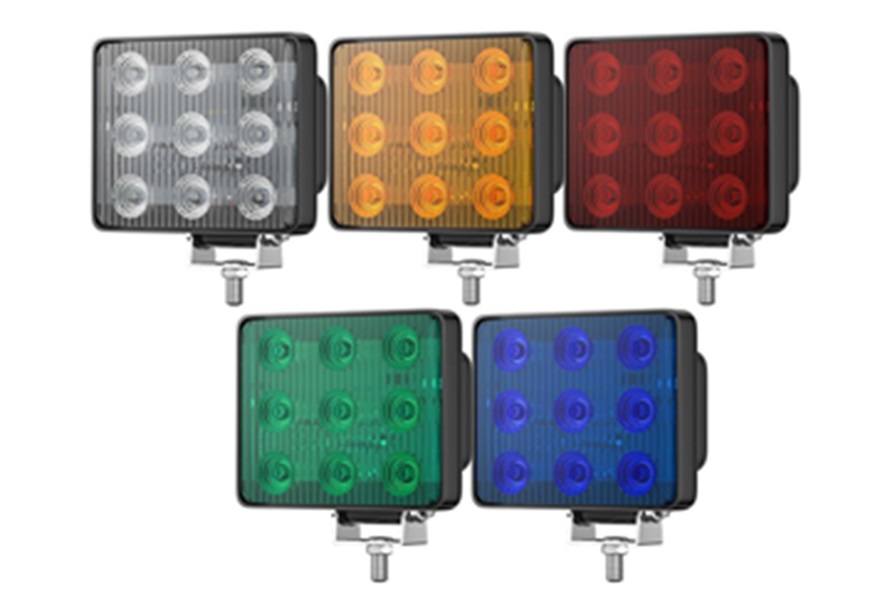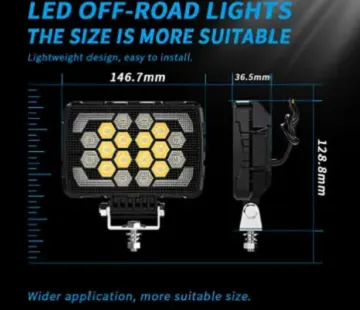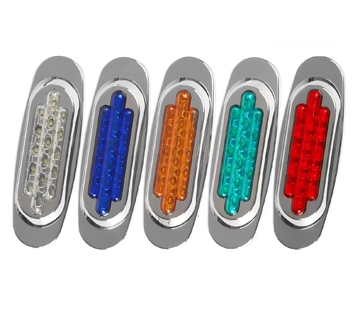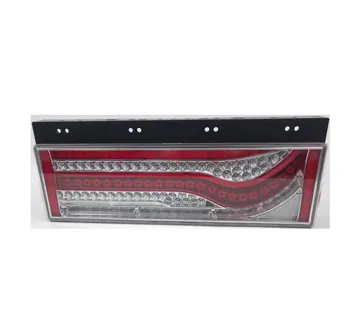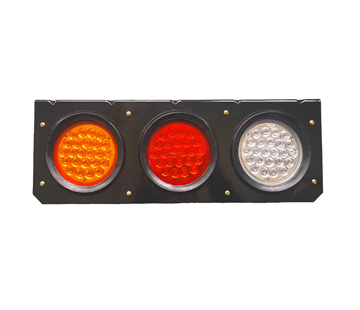
In commercial transportation, safety is more than a regulation—it's a fundamental responsibility. Among the many components that enhance vehicle safety, roof mounted clearance lights play a crucial role in improving visibility and signaling a vehicle's dimensions, especially for larger trucks and trailers. This article examines whether these lights are legally required, highlights their safety and operational benefits, outlines how to install them correctly, distinguishes them from standard clearance lights, and dispels common misconceptions. For fleet operators, manufacturers, and safety professionals, a clear understanding of these aspects is essential to maintaining compliance and minimizing road risks.
Many jurisdictions mandate the use of roof mounted clearance lights on commercial vehicles to maintain visibility and prevent collisions in low-light or poor weather conditions. In the United States, for example, the Federal Motor Vehicle Safety Standards (FMVSS) require vehicles that exceed a specific width or height to be equipped with these lights. They alert nearby drivers to the presence and size of tall or wide vehicles, reducing the likelihood of accidents. Additionally, individual states may impose localized rules depending on environmental factors such as frequent fog, rain, or snowfall. Failure to comply with these lighting requirements can lead to fines, failed inspections, and potential liability in the event of an accident. Investing in dependable lighting systems from Hongyuan Auto Parts ensures that trucks not only meet federal and regional regulations but also maintain consistent, high-quality illumination that supports road safety and reliability.
Beyond compliance, roof mounted clearance lights deliver substantial safety benefits. They enhance vehicle visibility at night or during inclement weather, allowing surrounding drivers to better gauge a truck's height and width. This level of visibility is vital in preventing side-swipe collisions, underpass accidents, and misjudged overtakes. They also contribute to a fleet's professional image, reflecting a commitment to safety and quality. Operators who equip their vehicles with dependable lighting products—such as those manufactured by Hongyuan—demonstrate diligence in safety management. Moreover, studies show that vehicles with properly installed and functioning clearance lights are statistically less likely to be involved in collisions, which can also lead to reduced insurance costs and higher safety ratings. In short, these lights protect both assets and reputations while improving operational safety.
Proper installation of roof mounted clearance lights is essential to achieve maximum performance and durability. Begin by selecting a light model that conforms to current safety standards and is suitable for the vehicle's design. Before installation, assemble the necessary equipment: mounting brackets, wiring harnesses, fasteners, and a voltage tester. Choose a flat portion on the vehicle's roof free from obstacles and ensure the mounting surface is clean and dry. Drill the required holes for securing the brackets and use waterproof sealant around the fixtures to prevent moisture intrusion. After mounting the lights, connect the wiring following the manufacturer's diagram and test the system with a voltage tester to verify full functionality. Installing premium-quality components such as Hongyuan's wiring systems and lighting units minimizes the risk of electrical faults and water-related damage. Testing and sealing are crucial final steps that ensure the lights perform reliability over time.
Although both roof mounted and standard clearance lights serve to enhance visibility, their placement and purpose vary significantly. Roof mounted clearance lights are positioned at the highest point of a truck or trailer, ensuring the vehicle can be seen from longer distances—especially by oncoming traffic or when viewed from behind in low-light conditions. These lights are often required for larger, taller vehicles. Standard clearance lights, in contrast, are generally mounted on lower sections or along the sides and are used on smaller or medium-sized vehicles where roof mounting is unnecessary. Roof-mounted versions also require sturdier installation systems to withstand wind pressure and vibration. Hongyuan offers both lighting categories, designed for commercial vehicle demands while maintaining compliance with international safety standards.
A frequent misunderstanding in the trucking industry is that roof mounted clearance lights are optional. In reality, they are often mandated by law for larger commercial vehicles. Another misconception is that all lights provide equal performance; however, light quality can vary widely. LED models typically outperform older bulb-based lights in brightness, energy efficiency, and durability. Some operators also believe that installation is straightforward and requires minimal expertise. In fact, improper installation can lead to electrical failures, leaks, or misalignment that compromise safety. Utilizing expert installers or quality OEM parts—like those from Hongyuan—ensures consistent and compliant performance. Addressing these misconceptions helps improve industry standards and reduces the likelihood of preventable accidents or regulatory violations.
Roof mounted clearance lights are indispensable for enhancing safety and maintaining compliance across commercial fleets. Understanding the legal requirements, appreciating their operational advantages, ensuring correct installation, and dispelling common myths enables operators to maintain safety and efficiency on the road. At Hongyuan Auto Parts, we take pride in providing high-quality, regulation-compliant vehicle lighting solutions designed for durability and exceptional performance. For more details about our products or professional support, please contact info@jshungyuen.com or explore our catalog to discover the right lighting systems for your fleet needs.
 English
 العربية
 русский